The Divergence Dilemma: Why Split Forecasts Matter More Than the 2026 Surplus Itself
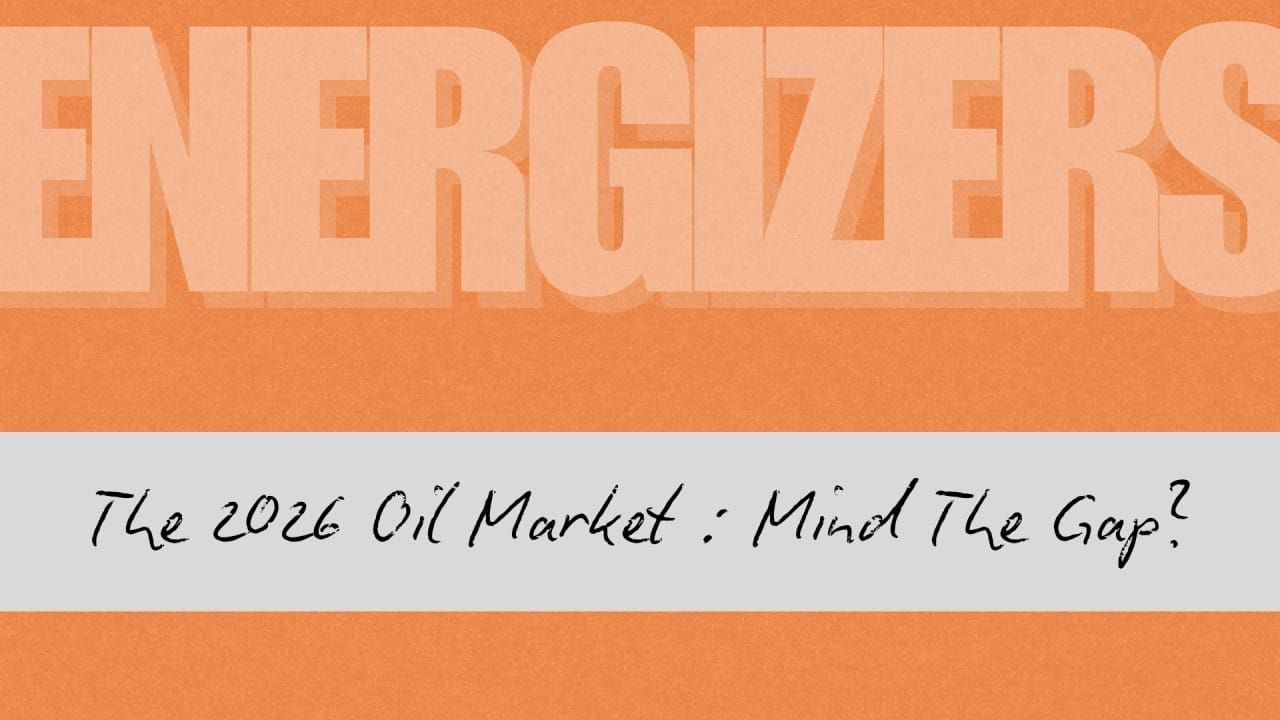
The 2026 oil market isn't facing a surplus problem - it's facing a consensus problem. When the International Energy Agency projects a surplus of 3.7 million barrels per day through the year while OPEC forecasts near-balance between supply and demand, the uncertainty itself becomes the risk. This gap - roughly 1.4 million barrels per day in demand growth expectations alone - is larger than most actual supply disruptions.
Markets can price a surplus. They can price scarcity. What they struggle to price is radical uncertainty about which reality wea are living in. And that's precisely where energy executives find themselves as they make capital allocation decisions that will define their companies' position for the next five years.
The narrative of energy abundance in 2026, driven by surging non-OPEC+ output from Brazil, Guyana, and Canada alongside cooling Chinese demand, masks a more complex and concerning reality. While physical balances may appear loose on paper, the geopolitical risk premium is being systematically underpriced, crude quality mismatches are creating hidden brittleness in supply chains, and most critically, forecast divergence is paralyzing strategic planning across the industry.
The unprecedented split in market expectations
The IEA-OPEC divergence on 2026 demand growth has reached historic proportions. The IEA's latest January report forecasts global oil demand growth of just 930,000 barrels per day for 2026, up slightly from their December estimate but still dramatically below OPEC's projection of 1.38 million barrels per day. This 450,000 barrel per day gap in demand expectations translates directly into vastly different supply-demand balance assessments.
The divergence extends beyond simple numbers. The IEA sees structural headwinds: weakening Chinese consumption, accelerating EV adoption, and petrochemical feedstock demand that can't fully offset declining transportation fuel use. Their first quarter 2026 outlook projects a surplus of 4.25 million barrels per day - a figure that would represent about 4% of global demand and the largest glut since the pandemic collapse.
OPEC, meanwhile, maintains its bullish stance, holding global demand growth forecasts steady at 1.3 million barrels per day for 2025 and 1.38 million barrels per day for 2026. The organization now projects that supply will match demand next year - a notable shift from earlier projections of supply deficits, but still fundamentally different from the IEA's surplus scenario.
The U.S. Energy Information Administration sits uncomfortably between these poles, forecasting 1.1 million barrels per day demand growth for 2026 - closer to OPEC than the IEA but reflecting similar concerns about the impact of tariff tensions and slower economic growth.
Why divergence matters more than direction
Here's what makes this moment particularly challenging for industry strategists: Capital allocation decisions being made today are based on fundamentally incompatible views of the market two to three years out. And unlike typical forecast disagreements that resolve as more data becomes available, this divergence is driving real-time policy and business responses that could become self-fulfilling.
Consider OPEC+'s response. The group paused production increases for the first quarter of 2026 specifically in reaction to bearish IEA forecasts and softening prices. This decision - to hold output flat at roughly 43 million barrels per day - signals that the cartel sees genuine demand concerns and is prioritizing price defense over market share. But it also reveals something more troubling: OPEC+ itself is uncertain enough about market direction to adopt a wait-and-see posture.
For upstream operators, the implications are immediate and painful. Projects with 3-5 year development timelines can't afford to wait for forecast consensus. Companies must commit capital now to projects that will come online in 2028-2030, but they're making these decisions with rig counts in the Permian Basin at their lowest since November 2021 and declining drilling activity across major basins, not because of technical constraints, but because price uncertainty makes investment cases impossible to defend.
The EIA's own analysis highlights this dynamic: They project U.S. crude production will decline by 0.2 million barrels per day in 2027 because of lower oil prices reducing drilling activity today. This is forecast divergence translated into supply destruction - the market's radical uncertainty about 2026-2027 prices is already shaping 2027-2028 supply.
Downstream, refiners face equally vexing choices. Should they proceed with planned maintenance expecting ample crude availability, or should they accelerate runs to capture margins if disruptions materialize? The Atlantic Basin has permanently closed nearly 800,000 barrels per day of refining capacity, fundamentally tightening product balances - yet refiners are running at reduced utilization rates in anticipation of a crude glut that may or may not materialize.
The false security of physical abundance
Even if we accept the bearish case - that 2026 will indeed see substantial oversupply - the composition and location of that surplus matters far more than headline numbers suggest. This is where the notion of "energy abundance" becomes dangerously misleading.
The 2026 production growth story is concentrated in light, sweet crude from the Americas. The U.S., Brazil, and Guyana together account for nearly half of projected global production growth. Guyana's offshore development remains one of the fastest production ramps in modern oil history, while Brazil's pre-salt fields continue exceeding expectations.
The problem? This light crude doesn't match the heavy-sour diet of many Asian refineries, which were purpose-built to process Middle Eastern grades. As one analysis notes, "over 60% of U.S. refinery capacity is optimized for heavy crude processing" - yet the U.S. is producing primarily light crude. This creates a structural mismatch where theoretical surplus barrels cannot seamlessly substitute for the specific crude grades refineries need.
The Venezuela situation crystallizes this vulnerability. The country's disrupted heavy-sour crude exports of approximately 600,000 barrels per day cannot be easily replaced by light crude from other sources. U.S. Gulf Coast refineries, which invested billions in coking and hydrocracking capacity specifically designed for heavy feedstock, must now source alternative heavy grades at premiums of $5-15 per barrel, or accept reduced throughput and margin compression.
Meanwhile, crude oil on water has surged by 215 million barrels since September, with much of this increase attributed to sanctioned barrels struggling to find buyers, record long-haul shipments from the Americas to Asia, and seasonal factors. But this visible accumulation masks critical details: refined product stocks in key pricing hubs show only marginal builds, and the diverging trends across crude, NGLs, and products reflect a fragmented market where abundance in one segment doesn't translate to security in others.
The hidden brittleness in supply chains
The geopolitical risk premium embedded in current oil prices - roughly $5-8 per barrel by most estimates - reflects concerns about disruptions in the Middle East, particularly involving Iran. But this premium systematically underprices several compounding vulnerabilities that could rapidly transform paper surplus into actual shortage.
First, sanctions enforcement has intensified. Russian oil exports declined by 420,000 barrels per day in November, slashing revenues to $11 billion, $3.6 billion below the previous year. Urals crude prices plunged to $43.52 per barrel, their lowest since February 2022. Meanwhile, Iranian oil on water surged by 40 million barrels as Chinese independent refiners paused buying amid exhausted import quotas.
These barrels - roughly 1-2 million per day of combined Russian and Iranian exports - operate in gray markets with precarious logistics. They're priced into supply forecasts but represent inherently unstable flows vulnerable to sanctions tightening, payment disruptions, or maritime interdiction. The market treats them as reliable supply; they are anything but.
Second, the Atlantic Basin refining capacity closures mentioned earlier are permanent, not cyclical. When 800,000 barrels per day of refining capacity shuts permanently, it removes not just throughput but also the optionality to respond to disruptions. Markets assume that alternative refineries can ramp up, but those refineries are already operating at high utilization, and increasing runs requires crude grades they may not have access to.
Third, logistical complexity has increased. Record long-haul shipments from the Americas to Asia mean oil spends more time in transit, reducing effective available inventory. Sanctions-related routing changes add weeks to voyage times. What looks like ample crude on paper includes significant volumes effectively locked up in transportation infrastructure.
The transformation imperative: building adaptive capacity
This brings me to the strategic question that should preoccupy energy executives: In conditions of radical forecast uncertainty, how do you position your organization for success?
The instinctive response is to pick a scenario - bet on oversupply or balance - and optimize accordingly. This is precisely wrong. When credible forecasters disagree this fundamentally, the correct posture isn't to choose sides but to build organizational capability to thrive under either outcome.
This means several things operationally:
- Portfolio flexibility over point optimization. Rather than committing all capital to long-cycle upstream projects (which assume specific price trajectories), maintain a mix of short-cycle and long-cycle investments. Shale assets provide optionality - production can be adjusted relatively quickly in response to price signals. Combine this with more traditional offshore or international projects that offer scale and longevity but less flexibility. The portfolio approach creates natural hedges.
- Scenario planning as operational discipline. Most companies do scenario planning as an annual strategic exercise. In this environment, it needs to be a quarterly or even monthly operational rhythm. Run your business plans against both IEA and OPEC forecast families. Identify trigger points - specific price levels, inventory data, or policy announcements - that would cause you to pivot from one scenario to another. Prepare the organizational muscle memory to execute those pivots quickly.
- Infrastructure investment in resilience, not just efficiency. The temptation in a "glut" year is to defer capital spending on infrastructure - storage, transportation, diversified crude sourcing capability. This is when these investments become most valuable. The companies that will win the next price spike are those that can access stranded barrels, move crude between regions, and process alternative grades. These capabilities cost money and reduce short-term efficiency. They buy survival when markets dislocate.
- Financial hedging that matches forecast uncertainty. Traditional hedging assumes you know the distribution of future prices and hedge accordingly. When the distribution itself is contested - when credible forecasters see fundamentally different price paths - hedging strategies need to reflect that bifurcation. This might mean options strategies that provide protection against both sustained low prices and sudden spikes, even if the premium structure is less favorable than directional hedges.
- Organizational capability to process ambiguity. This is the least tangible but perhaps most important. Companies need decision-making processes, performance metrics, and cultural norms that can function under sustained uncertainty. If your incentive systems punish executives for making cautious bets that prove unnecessary, you'll systematically bias toward brittleness. If your capital allocation process demands five-year projections with narrow confidence intervals, you'll generate false precision rather than honest uncertainty.
What to watch in the months ahead
Several indicators will signal whether this forecast divergence narrows or persists:
- Chinese crude imports and refinery runs. The IEA has slashed projected Chinese demand growth for 2026 to just 90,000 barrels per day, down from 220,000 barrels per day forecast at the start of 2025. If Chinese imports remain weak and independent refiners continue facing quota constraints, the bearish case strengthens. If imports rebound—particularly if strategic stockpiling accelerates - it suggests tighter balances than IEA projects.
- OPEC+ production policy evolution. The group will re-evaluate maximum sustainable production capacity in Q4 2026 when setting 2027 targets. If they maintain current restraint or cut further, it signals genuine concern about oversupply. If they begin unwinding cuts aggressively, it suggests confidence in demand resilience.
- U.S. drilling activity. The Permian rig count and DUC (drilled but uncompleted) inventory provide real-time signals of operator confidence. Rig counts have fallen to 246—lowest since August 2021 - while DUC inventory is depleted. Any stabilization or increase in drilling activity would suggest operators see a path to profitability even at current prices.
- Sanctions regime evolution. New EU and UK sanctions targeting Russian shadow fleet tankers take effect in early 2026. How rigorously these are enforced, and whether they successfully reduce sanctioned flows, will materially impact effective global supply. Similarly, any changes to Venezuela sanctions - either tightening or relaxation - would shift supply availability by 500,000-600,000 barrels per day.
- Crude quality differentials. The spread between heavy-sour crude (like Venezuelan or Middle Eastern grades) and light-sweet crude (like WTI or Brent) will signal whether quality mismatches are binding. If heavy-sour differentials widen significantly, it confirms that headline surplus figures mask specific grade shortages.
Looking forward: divergence as competitive opportunity
The conventional wisdom heading into 2026 focuses on whether the IEA or OPEC is right about the supply-demand balance. This framing misses the more interesting question: In markets where credible forecasters disagree this fundamentally, which organizational capabilities create competitive advantage?
History suggests that periods of maximum forecast uncertainty often precede significant market dislocations, either the anticipated surplus materializes and prices collapse further, validating the bears, or some combination of demand resilience and supply disruptions tightens markets, vindicating the bulls. What's rarely discussed is that these dislocations create opportunities for companies positioned to exploit them.
The smart money in 2026 isn't betting on high prices or low prices. It's investing in:
- The ability to source barrels from multiple regions and grades
- Storage and logistics infrastructure that can arbitrage regional price dislocations
- Refining flexibility to process alternative crude slates
- Portfolio balance between short-cycle and long-cycle assets
- Organizational decision-making processes that can function under sustained ambiguity
These capabilities cost money. They reduce near-term efficiency metrics. They are hard to justify in budget reviews where the CFO demands precision about expected returns. But they are precisely what separates companies that merely survive market volatility from those that capitalize on it.
My view is that the 2026 oil market will be defined less by whether supply ultimately exceeds or matches demand than by which companies built the organizational muscle to thrive regardless. The IEA and OPEC will eventually converge, either because actual data resolves their disagreement or because market conditions change enough that new forecasts supersede old ones.
But the strategic decisions made today under conditions of maximum uncertainty will shape competitive positioning for years to come. Companies that treat this moment as a problem to solve - pick the right forecast, optimize around it - will be perpetually reactive. Companies that treat it as a capability-building opportunity - develop the agility to succeed under multiple scenarios - will be defining the next era of energy leadership.
The false security of the 2026 surplus narrative lies not in whether oversupply materializes, but in the illusion that markets reward those who correctly predict the future. They don't. Markets reward those who build organizations capable of navigating uncertainty, adapting quickly when conditions shift, and capitalizing on dislocations that catch others flat-footed.
In a market where the forecasters can't agree, competitive advantage belongs to those who don't need them to.
The analysis and views presented in this article are my own and are based on review of several authoritative sources, including the International Energy Agency's Oil Market Reports, OPEC Monthly Oil Market Reports, EIA Short-Term Energy Outlook, and various industry analyses from Wood Mackenzie, Kpler, and other research firms. Generative AI tools were used solely to process, consolidate, and summarize data and information from these reports. I personally conducted the critical interpretation, formulated the central thesis, and provided the final perspective and conclusions.